
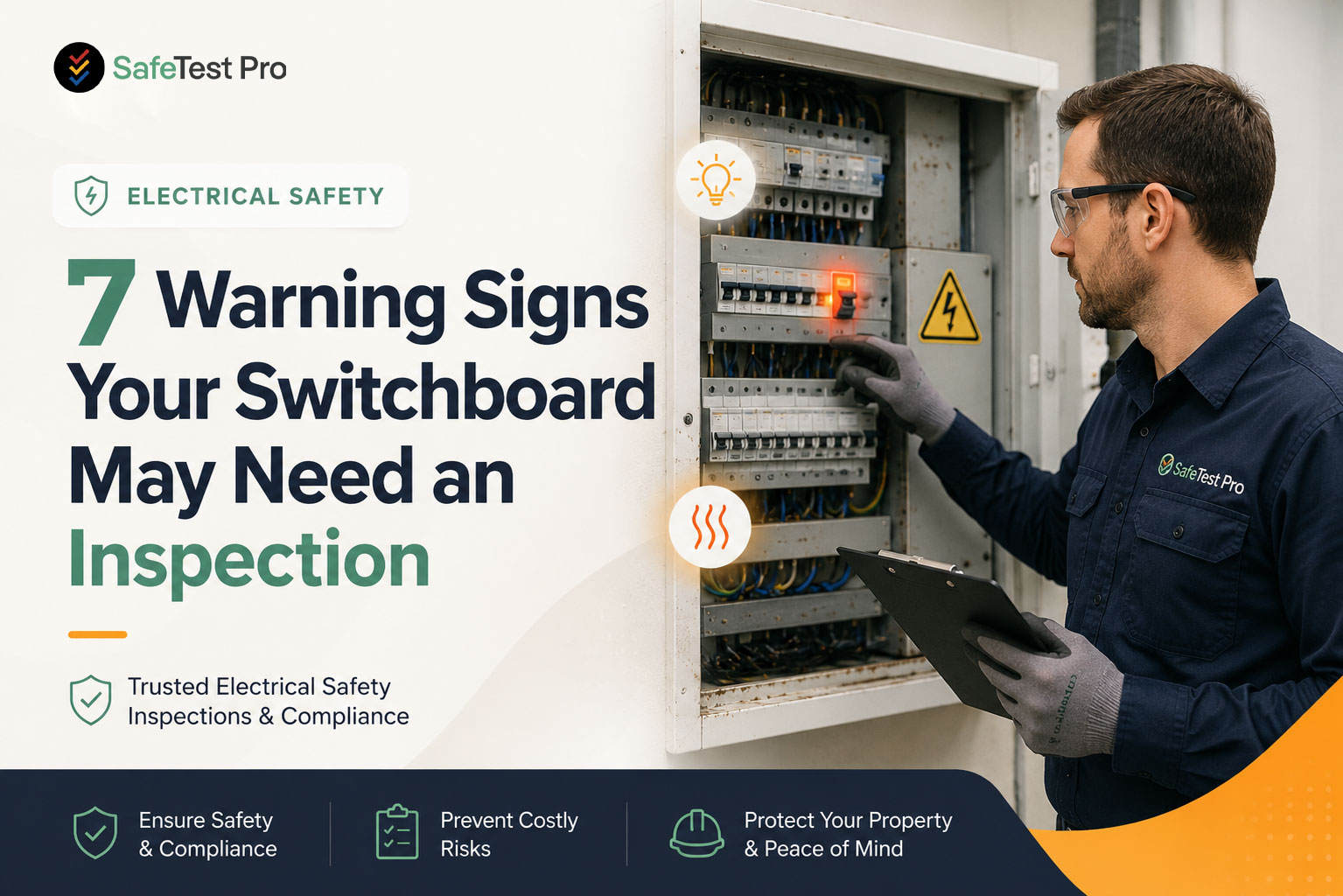
Your switchboard quietly manages the flow of electricity throughout your property. Every light, power point, appliance and piece of equipment relies on it to distribute power safely and protect individual circuits when something goes wrong.
Because it is usually tucked away in a meter box, utility room or service area, the switchboard can be easy to forget. However, electrical components can loosen, wear out, overheat or become damaged over time. Older boards may also struggle to support the growing number of appliances and electrical systems used in modern homes and workplaces.
A professional switchboard inspection can help identify overheating, loose connections, damaged components, poor labelling and other potentially unsafe conditions before they lead to equipment damage, disruption or more serious electrical hazards.
Here are seven warning signs that it may be time to arrange an inspection.
1. Circuit Breakers Keep Tripping
A circuit breaker is designed to switch off the electricity when it detects an unsafe condition. An occasional trip may happen when too many high-powered appliances are running on the same circuit. However, repeated tripping should not simply be treated as an inconvenience.
Frequent trips may be associated with:
- An overloaded circuit
- A faulty appliance
- Damaged wiring
- A loose electrical connection
- A defective circuit breaker
- A fault elsewhere in the electrical installation
Continually resetting the breaker without investigating the cause may leave the underlying issue unresolved. Avoid forcing a breaker to remain on or repeatedly switching it back on when it trips immediately.
A licensed electrical professional can assess the switchboard and connected circuits to determine why the protective device is operating.
2. You Notice a Burning Smell
A burning or hot-plastic smell near the switchboard should always be taken seriously.
It may indicate that a cable, connection, circuit breaker or another component is overheating. Electrical overheating can damage insulation and surrounding materials, increasing the possibility of equipment failure or fire.
You may notice the smell only when certain appliances or machinery are operating. It may also come and go as the electrical load changes. Even when there is no visible smoke, an unexplained burning smell deserves urgent attention.
Do not open the switchboard cover or touch internal components. Keep people away from the area and contact a licensed electrician or electrical contractor for advice. Call emergency services if there is smoke, fire or an immediate danger.
3. The Switchboard Feels Unusually Warm
Electrical equipment can produce some heat during normal operation, but the outside of a switchboard should not feel excessively hot.
Unusual warmth may be caused by loose terminals, overloaded circuits, deteriorating components or poor connections. These problems can create resistance, which generates additional heat as electricity flows through the connection.
You might also notice:
- Heat marks around breakers or switches
- Discolouration on the enclosure
- A melted or distorted plastic surface
- A smell that becomes stronger when electricity use increases
Infrared thermal imaging can sometimes help locate abnormal heat patterns that are not visible during a basic visual check. However, thermal findings need to be assessed in context by a suitably qualified professional.
Never remove a switchboard panel to investigate heat yourself. Internal parts may remain energised and can present a severe electric shock or arc-flash risk.
4. You Hear Buzzing, Crackling or Humming
A faint mechanical hum from some electrical equipment can be normal, but new, loud or irregular sounds from a switchboard should be inspected.
Buzzing, crackling or popping noises may point to:
- Loose electrical connections
- Electrical arcing
- A failing breaker or contactor
- Damaged internal components
- Excessive electrical load
These sounds can become more noticeable when air conditioners, ovens, pumps, machinery or other high-demand equipment are operating.
Do not remove the cover to locate the noise. Electrical work near an energised switchboard can be extremely dangerous, and incidents involving live low-voltage boards can cause serious arc-flash injuries.
Arrange an inspection promptly, particularly when the sound is accompanied by heat, a burning smell, flickering lights or repeated power interruptions.
5. Lights Flicker, Dim or Become Unusually Bright
Lights that briefly dim when a large appliance starts do not always indicate a switchboard fault. However, regular or unexplained changes in brightness can signal a problem within the property’s electrical system or incoming electricity supply.
Warning signs may include:
- Lights flickering across several rooms
- Lights becoming brighter and then dimmer
- Appliances behaving unpredictably
- Power dropping out in part of the property
- Problems affecting several circuits at once
In Western Australia, unexplained brightening or dimming of lights can also be associated with an electricity supply or neutral fault. The WA Government advises that shocks, tingles and unexplained changes in light brightness should be reported immediately to the relevant network operator.
Because the cause may be inside the property or on the electricity network, professional assessment is important. Avoid trying to diagnose the problem by opening the switchboard.
6. There Are Visible Signs of Damage, Rust or Moisture
A switchboard enclosure helps protect important electrical components from accidental contact, dust, moisture and physical damage. When the enclosure or its contents are compromised, the board may no longer provide the intended level of protection.
Look for visible issues such as:
- Cracks or gaps in the enclosure
- Missing covers or blanking plates
- Rust or corrosion
- Water marks or condensation
- Insect activity or debris
- Burn marks or discoloured components
- Loose switches or breakers
- Exposed openings
- Damaged or unreadable labels
Moisture is particularly concerning because water and electricity are a dangerous combination. Leaking roofs, plumbing faults, outdoor exposure and condensation can all affect electrical equipment.
Do not touch the board when it appears wet or damaged. Keep the area clear and contact a licensed electrical professional. In an emergency, follow the instructions of your electricity network operator or emergency services.
7. The Switchboard Is Old, Overcrowded or Poorly Labelled
An older switchboard is not automatically unsafe, but age can increase the likelihood of worn components, outdated equipment and previous alterations that may not meet the needs of the property today.
Your board may deserve closer attention when it contains:
- Older-style fuses
- A mixture of old and newer protective devices
- Crowded or untidy wiring
- Unused openings
- Faded, handwritten or missing circuit labels
- Several additions from renovations or equipment upgrades
- No clear identification of important switches
- Signs of previous temporary repairs
Modern properties often place much greater demand on their electrical systems than they did when the original switchboard was installed. Air conditioning, commercial equipment, solar systems, battery storage, induction cooking, electric vehicle charging and additional power outlets can all change the load and complexity of an installation.
Clear labelling is also important. During maintenance or an emergency, occupants and electrical workers need to be able to identify circuits and isolation points accurately.
An inspection can help determine whether the board remains in suitable condition, whether circuits are correctly identified and whether further testing, repairs or upgrades should be considered.
What Does a Switchboard Inspection Include?
The exact scope will depend on the type of property, the switchboard and the reason for the inspection. A professional service may include a visual and electrical assessment of the main switchboard, distribution boards and sub-boards.
Checks may cover:
- Visible wear, damage and unsafe conditions
- Signs of heat or discolouration
- Loose or deteriorated connections
- Condition of circuit protection devices
- Switchboard enclosure integrity
- Circuit and isolation labelling
- Evidence of moisture, dust or contamination
- Insulation resistance and other relevant electrical tests
- General condition of accessible components
SafeTest Pro’s switchboard inspection and testing service includes checks for overheating, loose connections, correct labelling, insulation resistance and visible signs of wear or damage.
Following the inspection, any identified issues can be documented so that appropriate repairs, further investigation or upgrade work can be planned.
Can You Inspect a Switchboard Yourself?
Property owners, tenants and workplace managers can look for obvious warning signs from a safe distance. You can note unusual smells, sounds, heat, visible damage and repeated circuit trips.
You should not remove covers, touch wiring, tighten terminals or attempt electrical repairs yourself. The area behind a switchboard cover may contain exposed energised parts, even when individual circuits appear to be switched off.
Electrical work in Western Australia must comply with applicable electrical licensing requirements and safety laws. WorkSafe WA advises that electrical work must be carried out in accordance with Western Australia’s electrical licensing framework and relevant guidance.
When Should You Arrange an Inspection?
Arrange professional attention promptly when you notice any of the warning signs discussed above. Some situations require more urgent action than others.
Seek immediate advice when there is:
- Smoke or fire
- A strong burning smell
- Crackling or popping sounds
- Significant heat or melting
- Water inside or around the switchboard
- An electric shock or tingling sensation
- A breaker that trips immediately every time it is reset
Electric shocks and tingles should never be ignored, even when they feel minor. They may indicate a serious fault affecting the electrical installation or network supply.
A switchboard inspection may also be worthwhile when purchasing a property, taking over a commercial tenancy, completing renovations, adding high-demand equipment or reviewing workplace electrical safety.
Do Not Wait for a Complete Power Failure
Switchboard problems do not always begin with a dramatic outage. The first clue may be a faint smell, an occasional trip, a warm enclosure or a light that flickers from time to time.
Addressing these signs early can help reduce the likelihood of unexpected downtime, damaged equipment and potentially dangerous electrical incidents. It can also give property owners and workplace managers a clearer understanding of the condition of their electrical system.
SafeTest Pro provides professional switchboard inspection and testing for homes, rental properties, commercial premises and workplaces across Perth. Our inspections are designed to identify visible defects, abnormal conditions and potential electrical safety concerns clearly and efficiently.
Concerned about the condition of your switchboard? Book an inspection with SafeTest Pro today.
This article provides general information only. It is not a substitute for an assessment by a licensed electrical professional. Do not open, dismantle or attempt to repair a switchboard yourself.